AI’s Global Reboot: Robotics, Routing, and the Future of Work
AI is no longer a niche tool—it’s reshaping the entire tech and labor landscape, from the hum of robotics labs in China to the dashboards that route enterprise prompts and the studios that host our music and film. In China, vendors are converging on humanoid robotics and embodied AI, signaling a push to integrate sensing, motion, and decision-making into platforms that could redefine manufacturing, services, and consumer devices. The ambition isn’t merely to impress with demonstrations; it’s about economic leverage—cheaper service delivery, faster prototyping, and new forms of human–machine collaboration that blur the line between software and hardware. This global wave sits beside a growing discipline: enterprises redesigning their AI stacks to match changing data, user behavior, and model churn, all while policy makers weigh safety, governance, and data responsibility.
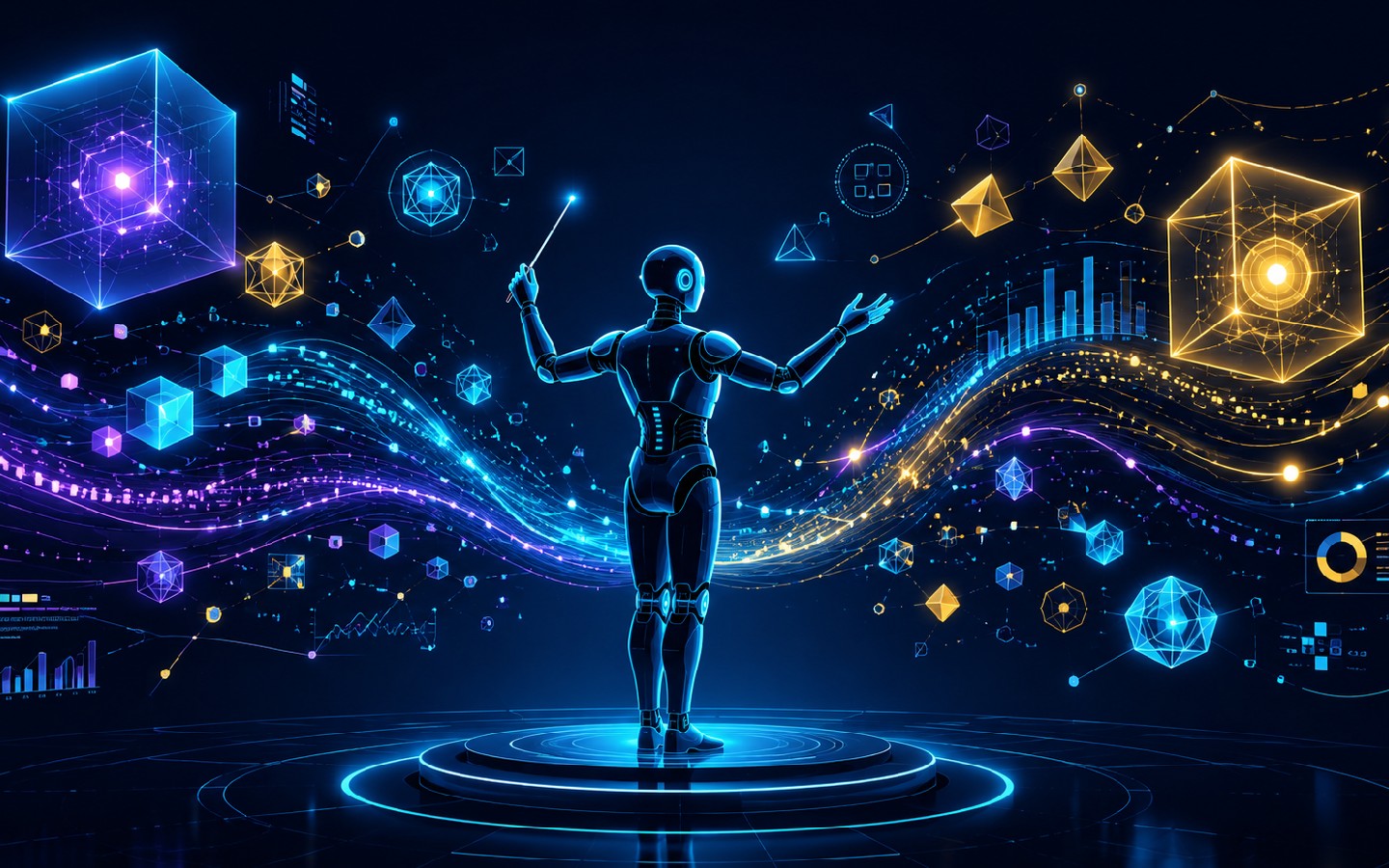
In the enterprise AI toolkit, routing decisions are emerging as a critical bottleneck. ACRouter proposes a dynamic, memory-enabled approach that beats static routers and premium defaults by learning which models work best for which tasks. Its Context-Action-Feedback loop records past outcomes, the Orchestrator chooses the target model, the Verifier checks results, and Memory stores execution records. The system can be self-hosted on modest hardware thanks to a sub-billion-parameter adapter, enabling organizations to replace hard-coded routing rules with self-improving logic that adapts as data and models evolve. This shift promises tangible savings—tests show cost advantages that can accumulate quickly across large workloads, enabling teams to do more with less and to react faster to new foundation models as they appear.
Policy and labor are in close dialogue as AI loops expand. In Australia, Prime Minister Albanese framed AI as a pivotal transition akin to moving to renewable energy, signaling a push for guardrails around safety, datacenters, and copyright reform to protect creators. Meanwhile, observers note real-world disruption: in New York, a Montefiore hospital reportedly replaced 12 nurses with AI-enabled processes, prompting union concerns about contracts and care quality. These stories sit alongside debates about AI in music and media, where questions about authorship and attribution surface with AI-generated songs and radio plays, underscoring the need for clear rules as AI permeates culture and work. The overall arc is clear: governance, ethics, and fair labor practices must mature in tandem with capabilities.
Security and software supply chains face new risks from AI hallucinations. Slopsquatting—where hallucinated package names enable attackers to inject malicious code—has raised alarms about the reliability of AI-assisted coding. Researchers warn that hallucinations are persistent and can be exploited, particularly with open-source models that exhibit higher rates of fabricated dependencies. The path forward combines automated checks that validate package names against registries, continuous threat intelligence, and governance that emphasizes verification of dependencies before they enter production. As AI tools become embedded in daily development, teams must implement end-to-end checks to prevent subtle red-teaming opportunities from slipping into production code.
Beyond code and policy, the infrastructure stack itself is being reimagined. Kubernetes-native workspace platforms aim to treat desktop delivery as a workload running under the same control plane as cloud apps, delivering secure, scalable, containerized sessions and reducing operational overhead. This trend dovetails with broader conversations about how AI touches everyday life—from Meta’s Muse image feature being scrutinized and then axed in response to privacy debates, to the ongoing conversation about AI’s role in media and creative work. Industry exemplars include Kasm’s Kubernetes-native workspace platform, which uses a containerized approach for secure, scalable, and auditable desktop experiences, and supports GPU-accelerated development for AI models. The mosaic of stories—from humanoid robotics in China to enterprise routing to hospital labor shifts and software security—points to a future in which governance, ethics, and human-centered design must be central to every deployment.
As the AI agenda broadens, the day-to-day tools organizations rely on—like collaboration platforms, code editors, and data pipelines—become more intelligent and more interconnected. The converging narratives also remind us that AI is not a single technology but an ecosystem: robotics pilots and embodied agents, adaptive routing stacks, policy guardrails, security hardening, and new kinds of creative and labor-market arrangements are all part of one ongoing transition. For readers tracking AI news, this synthesis—spanning China’s robotics ambitions, enterprise model routing, labor and policy debates, and security considerations—offers a practical lens on how technology, work, and governance will evolve together in the years ahead.
Sources
- Chinese Tech Vendors Converge on Humanoid Robotics and Embodied AI — https://aibusiness.com/robotics/chinese-tech-vendors-converge-humanoid-robotics-embodied-ai
- ACRouter picks the smartest AI model per task, beating Opus-only setups by 2.6x on cost — https://venturebeat.com/orchestration/acrouter-picks-the-smartest-ai-model-per-task-beating-opus-only-setups-by-2-6x-on-cost
- Can Labor save us from the risks of AI? – podcast — https://www.theguardian.com/australia-news/audio/2026/jul/13/can-labor-save-us-from-the-risks-of-ai-full-story-podcast
- Albanese to compare pivotal moment in AI to renewable energy transition as he outlines approach — https://www.theguardian.com/australia-news/2026/jul/14/anthony-albanese-ai-speech-safety-copyright-datacentres-social-licence
- Tokenmaxxing Is Actually Good — https://aibusiness.com/responsible-ai/tokenmaxxing-is-actually-good
- Forget typosquatting; slopsquatting is the software supply chain threat created by AI coding tools — https://venturebeat.com/security/forget-typosquatting-slopsquatting-is-the-software-supply-chain-threat-created-by-ai-coding-tools
- Key Feature of Meta’s Muse Image Axed — https://aibusiness.com/generative-ai/key-feature-meta-s-muse-image-axed
- The New York nurses replaced by AI — https://www.theguardian.com/technology/2026/jul/13/nurses-new-york-ai
- The desktop infrastructure problem that Kubernetes finally solves — https://venturebeat.com/infrastructure/the-desktop-infrastructure-problem-that-kubernetes-finally-solves
- Is the most popular song played on Australian radio stations the product of generative AI? — https://www.theguardian.com/music/2026/jul/13/josh-fawaz-like-a-prayer-song-is-it-ai-radio
- ‘Navigating the unknown together’: me and my idiot AI boyfriend – podcast — https://www.theguardian.com/news/audio/2026/jul/13/navigating-the-unknown-together-me-and-my-idiot-ai-boyfriend-podcast
- China’s massive AI rollout – podcast — https://www.theguardian.com/news/audio/2026/jul/13/chinas-massive-ai-rollout-podcast
- Christopher Nolan says people ‘disdain’ AI and the idea it will replace humans is ‘nonsense’ — https://www.theguardian.com/film/2026/jul/13/christopher-nolan-odyssey-director-comments-ai-artificial-intelligence
-
Grok 4.6 Arrives: Frontier AI for Long-Running Tasks Meets Enterprise Reality
In a move redefining the frontier between cutting-edge AI and real-world business needs, SpaceXAI has released Grok 4.6,...
-
AI News: Noise-Canceling Headphones, Workplace AI Boundaries, and Reclaiming Personal Taste
In a world where machines tune our senses and shape our choices, three Guardian stories this week sketch...
-
AI Agents and Multimodal Embeddings: The Enterprise AI Revolution in 2026
AI Agents and Multimodal Embeddings: The Enterprise AI Revolution in 2026By AI News DeskIn March 2026, a Guardian...