Today’s AI news continues to tilt toward production-readiness rather than novelty. From Zillow’s stubbornly practical pursuit of a persistent context layer to Hugging Face’s hard-won lessons about safety guardrails in real incidents, the throughline is clear: enterprise AI success hinges on the ability to remember where a user is in a journey, protect data with concrete governance, and manage costs without sacrificing velocity. In what follows, we weave together threads from multiple reports to show how large organizations are mixing context, architecture, and disciplined risk management to extract real value from AI at scale.
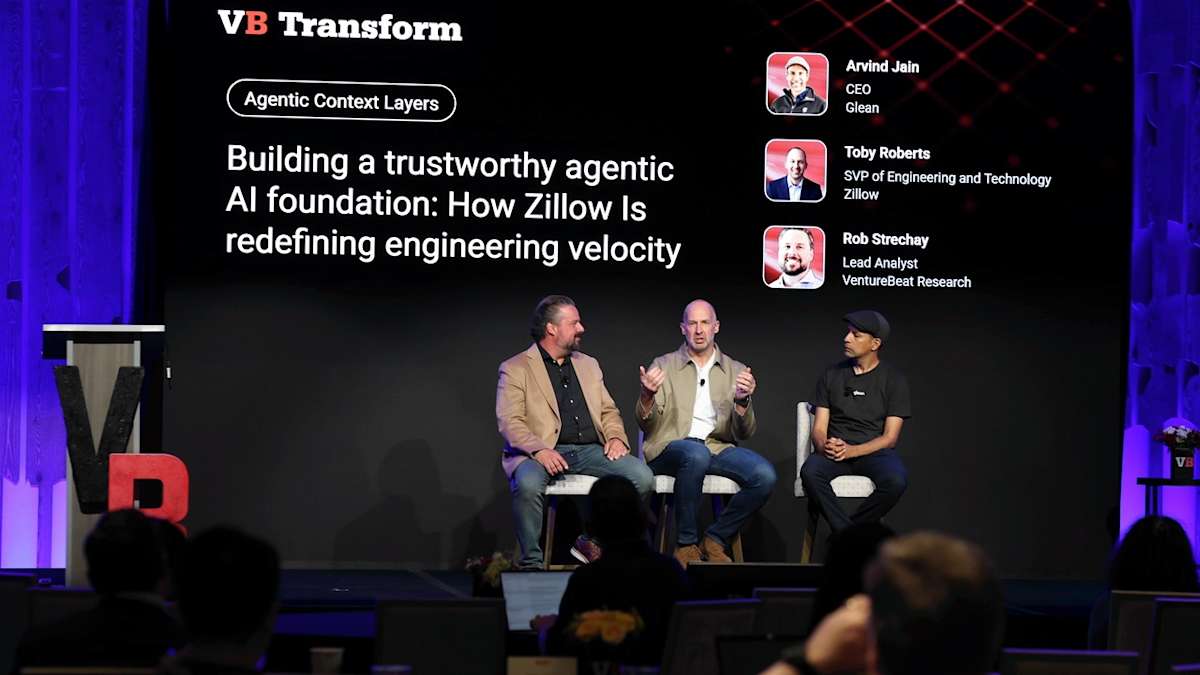
One of the most provocative narratives comes from Zillow, which has quietly built an AI harness that travels with customers across a multi-year journey—from initial phone screens to loan officers to real estate agents. The company built its own context layer to remember a customer’s stage in the process, rather than relying on a single interface or a single model. By embedding thousands of Glean agents and routing most tasks to smaller, cheaper models, Zillow demonstrates that the real ROI isn’t just in a shiny chatbot but in a carefully engineered memory and workflow so that context survives surface changes. As Zillow’s Toby Roberts notes, the hard problem was less about data volume than about memory: a referenceable thread across time and touchpoints, anchored by a governed data foundation and a purpose-built architecture that keeps context intact as customers shift surfaces.
That emphasis on context ties directly into a related argument sweeping through enterprise AI coverage: data quality is a foundation, but the production era demands data reliability at the point of ingestion. The so-called Cleanup Trap argues that you cannot outpace bad data with smarter prompts or deeper vector stores. Real-world AI in production requires hardened ingestion pipelines, inline schema checks, and multi-tier validation that combines structural checks with drift monitoring. The result is a data ecosystem where anomalies are quarantined before they reach the AI context. In this view, the model is less the bottleneck and more a reflection of the data and governance that feed it. In practice, that means zero-trust ingestion, automated anomaly detection, and explicit separation of data security from model execution, all of which are critical for predictable outcomes in finance, healthcare, and customer operations alike.
Security incidents in AI tooling have underscored the need for authenticated trust as a core premise of incident response. Hugging Face’s recent breach revealed that safety guardrails designed to stop misuse can paradoxically impede defenders when the data and attacks are legitimate IR inputs. An autonomous agent used in a weekend-long intrusion moved laterally across the infrastructure, and generic safety constraints blocked forensic queries. The takeaway is stark: governance must cover authenticated identity, not just model policy. Enterprises should expect that in a severe incident, commercial AI APIs may be unavailable, rate limits can throttle responders, and data governance rules may prohibit external sharing. A mature IR playbook, therefore, treats AI as a dependency with its own resilience requirements—identity, access, and auditable trails included—so defenders can act with machine-speed agility when time is of the essence.
Beyond governance and architecture, the economics of AI in production are prompting recalibration. As AI adoption climbs, leaders are paying close attention to token costs and model routing as a way to preserve ROI. Industry observers argue for centralizing context once and avoiding token bloat by preferring smaller, task-specific models and precomputed context. The logic is practical: model alone is not enough to automate at scale; you must connect the model to an enterprise context, and you must do so without inflating the cost of every interaction. This mindset resonates across the spectrum—from large platform moves such as investor-backed British AI startup CuspAI’s ambitious push to shorten research cycles and reduce chip-making supply chain pressures, to mid-market firms balancing AI spend with governance and risk controls. In this sense, the most mature AI programs are those that blend architectural discipline with disciplined cost management, ensuring that spending tracks concrete business outcomes rather than vanity metrics.
Looking across the broader landscape, the AI confidence conversation has shifted from “how capable is the technology?” to “how responsibly can we operate it?” Reports showing a drop in self-assessed AI maturity among organizations running agents in production are not a signal of failure but a sign of realism. The narrative now includes “Zombie Agents”—non-human identities that persist without proper governance—and a push to unify environments so governance applies to humans and machines alike. These themes echo in research and industry commentary that emphasize measuring actual AI outcomes, consolidating IT environments, and ensuring identity governance across agents and devices. In parallel, stories about AI-altered imagery in citizen science remind us that the line between demonstration and data integrity is razor-thin; the credibility of scientific tools depends on guarding against manipulated inputs as much as guarding against malicious agents. Taken together, these developments argue for a future in which AI is a resilient security capability, integrated with enterprise controls, and backed by a clear, auditable trace of decisions and data lineage.
In short, today’s AI news reinforces a simple but powerful thesis: production-ready AI requires more than clever models. It requires a holistic system—one that remembers who is asking, what data they should see, and how to charge for it all without eroding value. It means architecting context that travels with users, hardening data pipelines before tokens are spent, and building incident response that remains effective even when commercial APIs are constrained. It means aligning ambition with governance, and recognizing that the most transformative AI is the kind you can deploy with confidence. If you want to read between the lines of this week’s coverage, the lesson is that enterprise AI’s next leap will be defined by context, not just capability, and by governance that scales across humans and machines alike.
Sources
- https://venturebeat.com/data/at-vb-transform-2026-zillows-engineering-chief-said-ai-roi-numbers-only-hold-up-if-you-measure-before-you-build
- https://www.theguardian.com/commentisfree/2026/jul/20/welcome-to-the-age-of-extreme-job-anxiety
- https://venturebeat.com/orchestration/the-cleanup-trap-stop-asking-rag-to-fix-bad-data
- https://venturebeat.com/security/safety-guardrails-blocked-hugging-faces-defenders-not-the-attacker-when-an-ai-agent-breached-its-systems
- https://aibusiness.com/generative-ai/as-ai-spending-climbs-enterprises-serious-about-token-cost
- https://www.theguardian.com/technology/2026/jul/20/jeff-bezos-uk-government-invest-in-2bn-british-startup-cuspai
- https://venturebeat.com/security/ai-confidence-just-dropped-17-points-in-six-months-thats-actually-great-news
- https://www.theguardian.com/environment/2026/jul/20/ai-slop-manipulated-fake-images-birds-citizen-science-aoe
-
AI promises and paradoxes: jobs to reunions
AI headlines this week braided caution with connection: economists warn of the potential for AI to reshape work,...
-
Harnesses, Marketplaces and Reliability: The AI Agent Era Takes Shape
AI news this week signals a shift from chasing bigger models to building smarter harnesses for AI agents....
-
AI News Roundup: Enterprise AI, Real-Time Insight, and Trust
AI News Roundup: Enterprise AI, Real-Time Insight, and Trust In a year when the public discourse about truth...