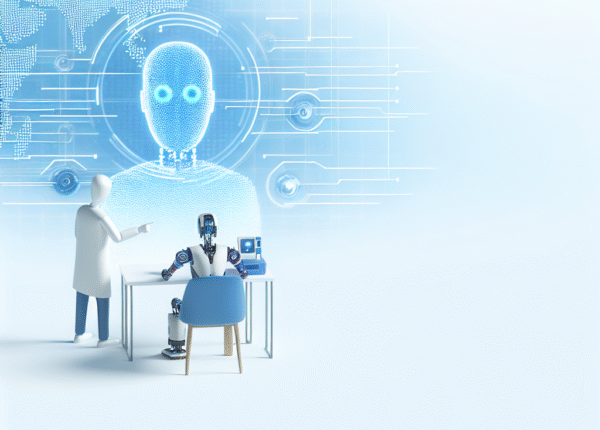
AI is rewriting the arts of reading, writing and teaching. Even as AI can complete language tasks in seconds, the deeper act of thinking and feeling through words remains uniquely human. A Guardian long read on the classroom in the age of AI suggests that while a clever chatbot can echo lesson plans and feedback, the subtleties of a student’s curiosity, a teacher’s intuition, and the sense of belonging in a classroom can’t be reduced to code. In classrooms around the world, educators are learning to braid powerful AI tools with human guidance, turning algorithms into assistants rather than replacements. The takeaway so far is that the engine can speed up learning and personalize practice, but it can’t replace the warmth of a thoughtful conversation, the reward of revising a paragraph into something expressive, or the shared arc of growing skills over a term. This is not a doom scenario but a call to design learning environments where human mentorship remains the core.
AI is also reshaping how work gets done. In manufacturing, the sight of humanoid robots assembling cars at BMW Leipzig marks a milestone where physical AI crosses from simulation into the factory floor. The pilot signals a broader shift toward automation that couples precision with human oversight. On the digital side, OpenAI says ChatGPT Instant 5.3 is less cringe and more accurate as critics have pressed for steadier, more reliable responses. IBM’s Watsonx is expanding to listen and respond with voice by embedding Deepgram into its orchestration tools, signaling that AI voices are not a novelty but an everyday workflow partner. Taken together, these stories illustrate a common thread: AI moves from clever tool to embedded capability, quietly threading itself into design reviews, customer support, code reviews, and decision logs. The world of work is not moving toward a AI takeover so much as a rebalancing where human judgment remains the final gatekeeper while machines handle the routine.
Policy and risk become the stage where the AI drama plays out in real time. A North Carolina primary framed as a datacenter politics test shows how the infrastructure behind AI can influence elections and public life. Behind the scenes, a corporate- and government-wide push to map AI dependencies has exposed a blind spot: most organizations cannot trace every model call through their vendor web. A deep dive into Anthropic and Pentagon optics outlines a practical path forward for security teams: map execution paths rather than vendors; log which services call which models and what data passes through. Identify control points you actually own and enforce at ingress and egress. Run a kill test on your top AI dependency to see what breaks when an API key goes dark. Force vendor disclosure on sub-processors and models so you know what powers your workflows. The takeaway is not fear but resilience built through careful planning and transparency, so the next forced migration doesn’t catch teams by surprise.
From online platforms to policy and research labs, the tension between openness and control is palpable. X has moved to curb revenue for users who post unlabelled AI generated war videos, reflecting society’s struggle to keep media honest in the era of synthetic footage. At the same time, a Quit ChatGPT boycott has gained momentum, a sign of consumer awareness that the power of AI platforms should be aligned with democratic values. News Corp’s AI licensing deal with Meta frames AI as an input for journalism, a reminder that trusted breaking news can be monetized in new ways. In enterprise AI, Capgemini joined OpenAI’s Frontier Alliance to bridge experimentation and deployment, while Alibaba’s Qwen team saw leadership departures that underscore the tension between open source values and commercial pressure. The phrase Gemini-fication captures the risk that vibrant open developer communities can be pulled toward corporate metrics, even as the broader ecosystem still yearns for transparent, controllable AI.
Taken together, these stories offer a map for readers who want to stay informed without losing agency. The AI era demands deliberate planning: map your vendor dependencies, keep a line of sight into where critical model calls actually happen, and practice a rehearsed exit if a vendor can’t be trusted. It also argues for preserving open source momentum and documentation so communities can adapt quickly when a forced migration arrives. As Alibaba, BMW, Google and guardians of newsrooms navigate this shifting landscape, the common thread is clear: human judgment, curiosity, and accountability remain the anchors as machines scale. If you read one AI news digest today, let it be this: the future is not a prophecy but a set of choices—about who controls the data, who verifies the outputs, and how we design systems that respect people as much as they respect performance.
Sources
- Joy of teaching English in the age of AI — Guardian
- Humanoid Robots Now Assembling Cars in Europe and China — AI Business
- OpenAI Says ChatGPT Instant 5.3 is Less Cringe, More Accurate — AI Business
- IBM Targets Voice Capabilities in Watsonx With Deepgram Partnership — AI Business
- Showdown over datacenter politics at heart of North Carolina primary — Guardian
- Google faces lawsuit after Gemini chatbot allegedly instructed man to kill himself — Guardian
- Pentagon vendor cutoff exposes the AI dependency map most enterprises never built — VentureBeat
- X to ban users from earning revenue if they post unlabelled AI-generated war videos — Guardian
- Quit ChatGPT: right now! Your subscription is bankrolling authoritarianism — Guardian
- News Corp is essentially an AI input company, chief executive says, after US$150m deal with Meta — Guardian
- Amazon Spends Another $21B to Beef up Spain’s AI Infrastructure — AI Business
- Capgemini Joins OpenAI’s Frontier Alliance to Scale Enterprise AI — AI Business
- Did Alibaba just kneecap its powerful Qwen AI team? Key figures depart in wake of latest open source release — VentureBeat