AI news is more than headlines; it’s a tapestry of tech, policy, and everyday business decisions. This week reveals how AI is becoming embedded in energy, governance, and enterprise operations, reshaping how we build, regulate, and trust intelligent systems.
In the energy arena, Meta’s collaboration with Overview Energy signals a broader trend of data centers powered by renewable energy. The plan to commercialize this approach by 2030 points to AI infrastructure that is as much about sustainability as computing power, reshaping how hyperscale operations balance performance with climate commitments.
Meanwhile, governance and ethics take center stage as Sadiq Khan weighs whether public funds should back firms whose actions may clash with city values. Reports that Palantir has held talks with Scotland Yard over a potential contract highlight the tension between cutting-edge crime analytics and the public good, underscoring how AI tools are increasingly scrutinized in the public sector.
Trademark moves in popular culture remind us that AI is not only about code and contracts. Taylor Swift has filed trademarks to protect the voice and image of the artist from misuse by AI, a step some say could deter misuse while others worry about overreach in protecting creative rights. The episode illustrates how AI-era rights management is moving from abstract debate to concrete legal practice.
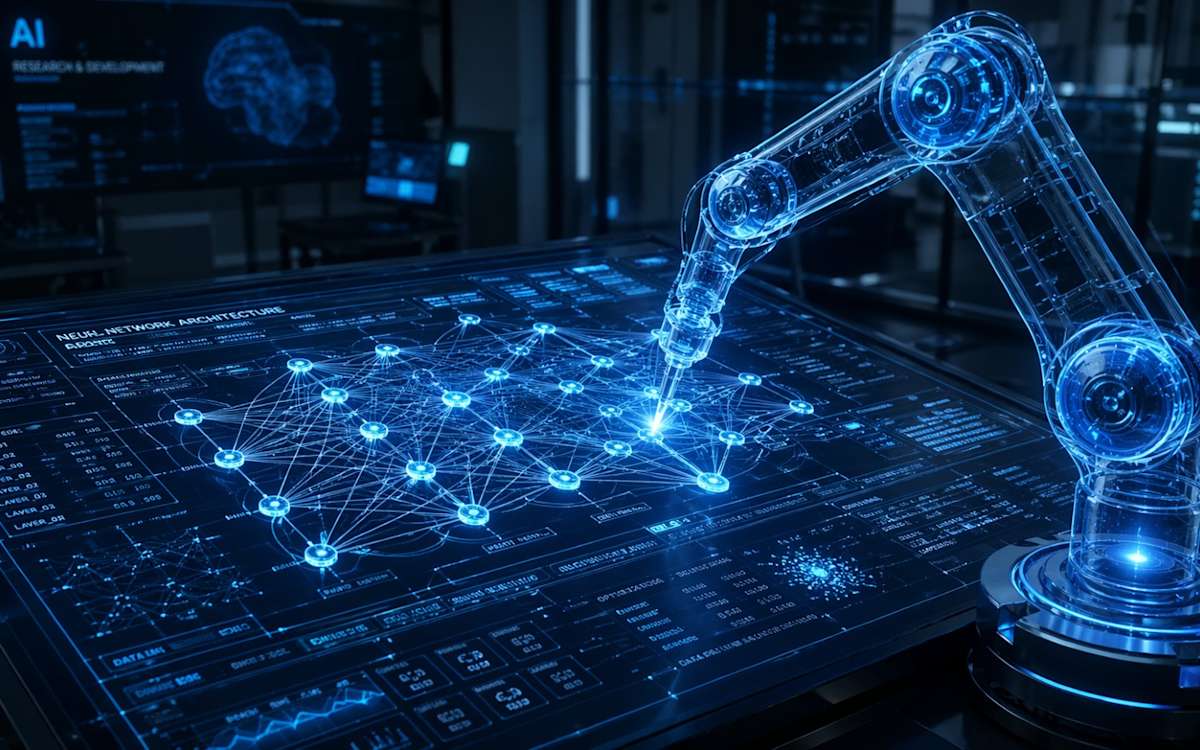
On the R&D front, ASI-EVOLVE represents a new autonomous loop that designs, tests, and learns faster than traditional human-led labs. The framework is built around a Cognition Base and an Analyzer, enabling enterprises to embed domain knowledge and derive actionable lessons from experiments. The researchers have open-sourced the framework, inviting developers to apply it to real-world AI stacks and reduce manual engineering overhead while pushing performance beyond legacy baselines.
In retrieval, new research from Redis on RAG shows that relying on a single vector for both recall and precision can degrade performance by up to 40 percent in some models. The study advocates a two-stage approach: Stage one recalls a broad set of candidates, while Stage two uses a small Transformer verifier to check for structural mismatches, such as negation flips. For enterprise pipelines, this trade-off between latency and accuracy matters, but the gains in reliability can be substantial for precision-sensitive workloads.
Geopolitics also shapes AI momentum. China blocked Meta’s $2bn Manus takeover, signaling that cross-border AI investments remain a contentious frontier. The energy and data center race often intersects with national security and regulatory risk, influencing where and how AI infrastructure expands.
Beyond these headlines, the AI ecosystem shows a broader pattern: big tech is pursuing strategic bets—from Google’s potential $40B investment in Anthropic to the evolving role of automation in supply chains, where next‑gen iPaaS platforms promise more resilient operations amid volatility. Yet the journey is not free of friction, from job-scams to governance dilemmas that demand careful policy design.
As these threads converge, one takeaway is clear: the AI era demands a careful balance between rapid experimentation and responsible governance. Businesses, policymakers, and researchers must read the signals across energy, industry, and geopolitics to navigate a future where AI power is abundant but stewardship is essential.
- Meta Taps Solar Energy to Power Data Centers
- Sadiq Khan may try to stop Scotland Yard signing Palantir contract
- Taylor Swift files trademarks for voice and image amid concern over AI misuse
- New AI framework autonomously optimizes training data, architectures and algorithms — outperforming human baselines
- Goldman raises oil price forecasts as Iran war deadlock continues; Shell buying Canada’s ARC in $13.6bn deal – as it happened
- How AI job scams are destroying people’s hopes | Letters
- China blocks Meta’s $2bn takeover of AI agent developer Manus
- RAG precision tuning can quietly cut retrieval accuracy by 40%, putting agentic pipelines at risk
- Why supply chains are the proving ground for automation‑led iPaaS
- DeepSeek-V4 Could Change Global AI Model Race
- Elon Musk and Sam Altman face off in court over OpenAI’s founding mission
- Inside China’s robotics revolution – podcast
-
AI News: Artists’ Rights, Democracy, and the Lean4 Safety Net
Today’s AI news reads like a map of growing pains and opportunities shaping policy, society, and the very...
-
Oversight Lag in AI: Facial Recognition, Minds, and AI-Driven Scandals
Across London and beyond, biometrics watchers warn that oversight of AI-powered facial recognition is moving slower than the...
-
AI News Daily: Regulators, Antisocial Media, and the AI Economy Shift
AI News Daily: Regulators, Antisocial Media, and the AI Economy Shift Today’s AI News digest threads together a...